In addition to educational games, we’ve also developed practical, interactive, and experimental experiences to dive even deeper into the world of geotechnics. Here you’ll find resources that bring concepts to your fingertips—literally.
Ever wanted to play foundation engineer without getting your hands dirty? With our interactive simulations built in Scratchnow you can! Inspired by the PhET project from the University of Colorado, these simulations let you explore how variables such as soil type, foundation dimensions, and water table level impact bearing capacity.
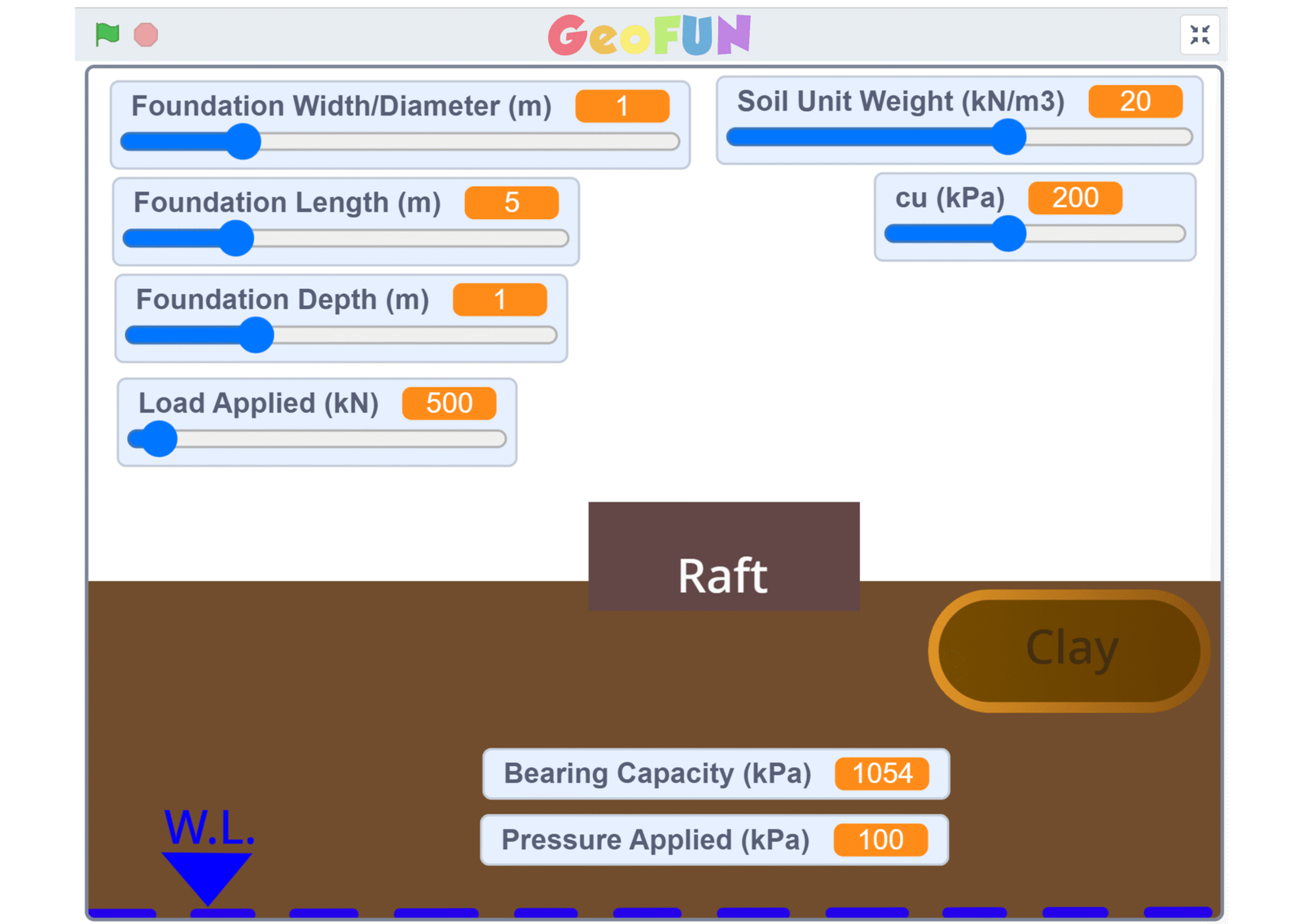
This tool allows you to:
Important: This activity should be used after theoretical instruction on the topic in class.
The simulation was developed from scratch by Dr Bruna Lopes, who programmed, tested, and fine-tuned every detail as if it were a mini virtual foundation. Laís Lopes brought a sharp and critical eye to the review process, ensuring everything ran smoothly – especially the concepts!
Attention, potato scientists! Who says geotechnical learning needs a fancy lab to be fun and meaningful? This collection of activities turns everyday objects — like potatoes, paper towels, and sand — into powerful tools for scientific exploration. The proposed guidelines are adapted from well-established practices in unsaturated soil education and organized so that any educator, even with limited resources, can carry them out in the classroom or in science workshops.
These experiments not only demonstrate fundamental concepts such as matric and osmotic suction, but also promote active observation, hypothesis formation, and critical thinking — essential pillars of deep and lasting learning.
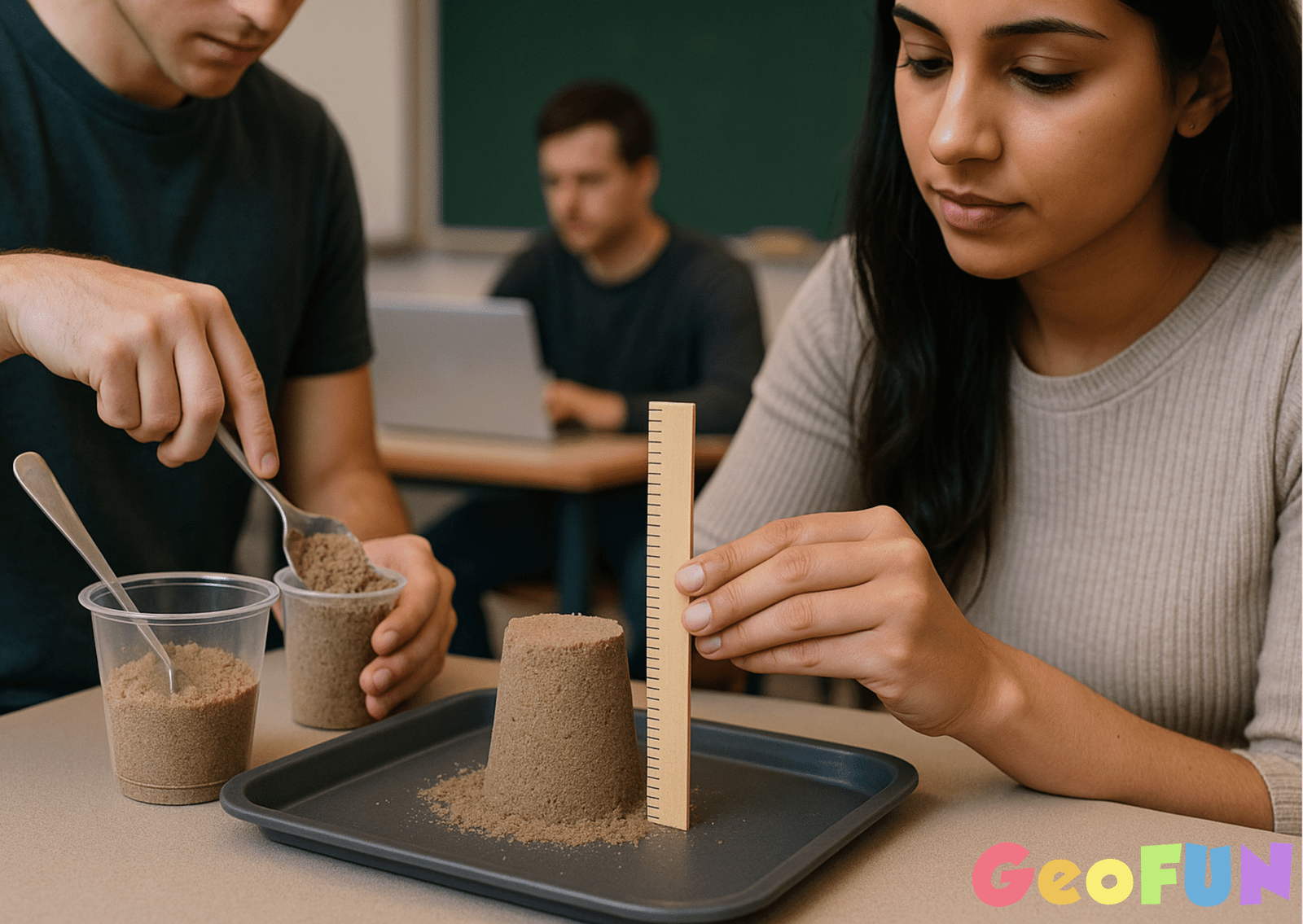
🏰 Sandcastle Experiment: A playful approach to demonstrate how moisture content affects the strength and cohesion of sand. Students build mini castles using dry, moist, and saturated sand and observe their different levels of stability, illustrating the concept of matric suction.
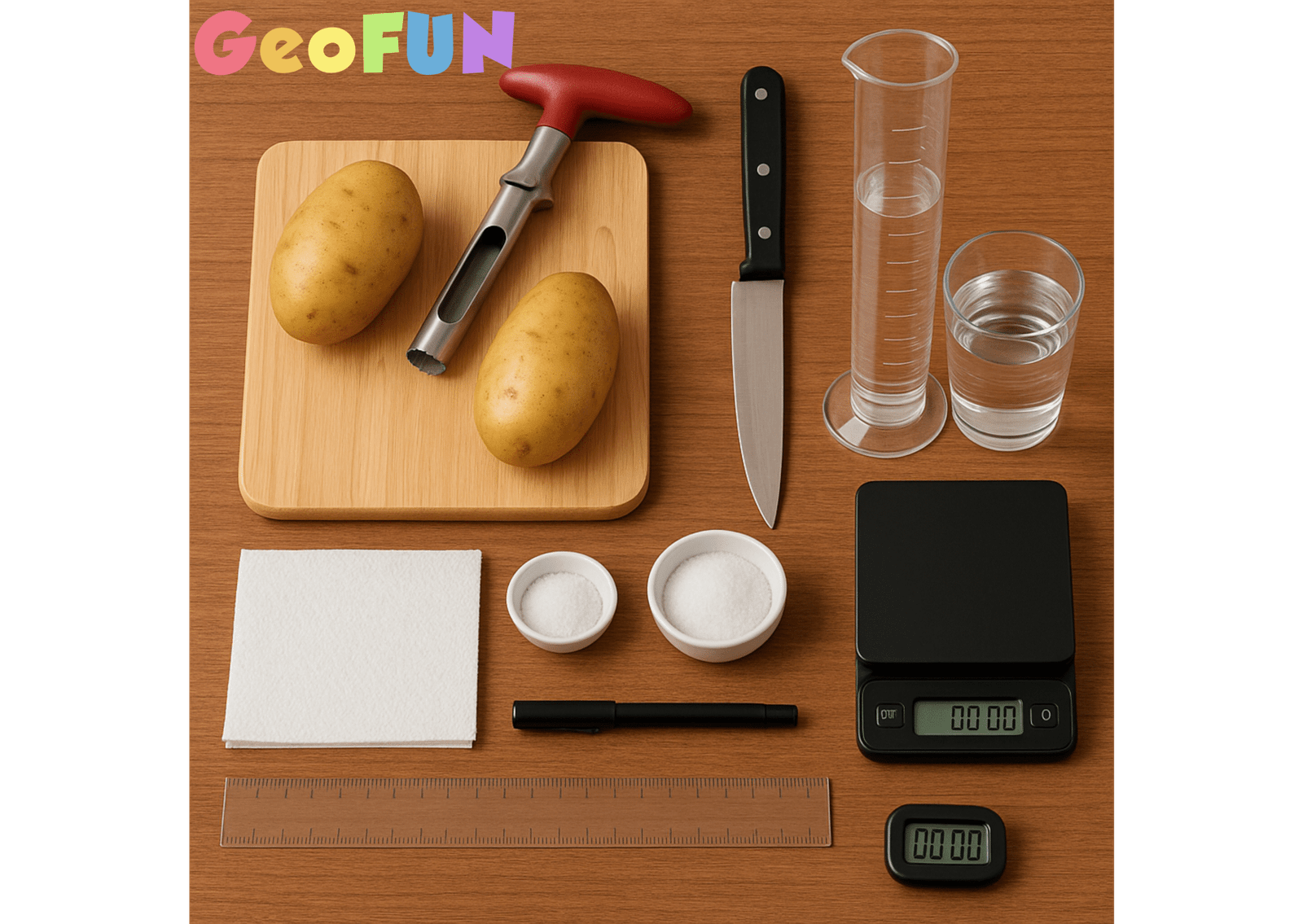
🥔 Osmotic Potato: Using potato slices and saline solutions of varying concentrations, students observe volume and mass changes to understand the effects of osmotic suction. This is a visual and accessible way to explore water movement and osmotic balance in soil pores.
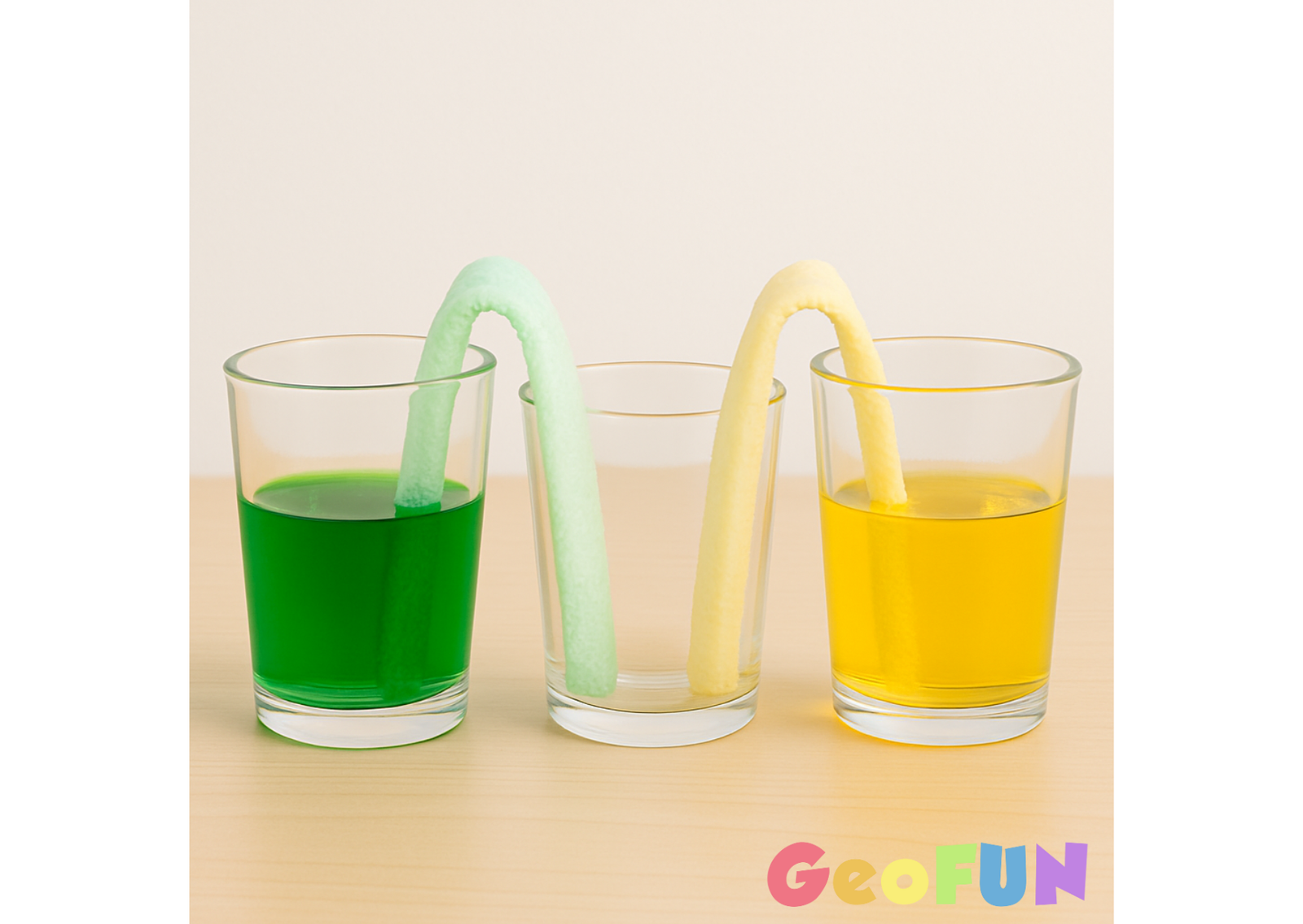
💧 Walking Water: A simple and colorful activity that visualizes water flow between cups connected by paper towels. It practically demonstrates capillary action and matric suction, with immediate results and strong visual impact.
🧠 Guided Conceptual Discussions: A set of questions and discussion prompts to help students connect the phenomena observed in the activities with theoretical foundations. It encourages dialogue, argumentation, and deep learning through group reflection.
All these fun (and educational!) experiments with potatoes, paper towels, and sandcastles were designed, tested, and implemented by Dr Bruna Lopes. If you think teaching suction with vegetables is amazing, now you know who came up with the idea.
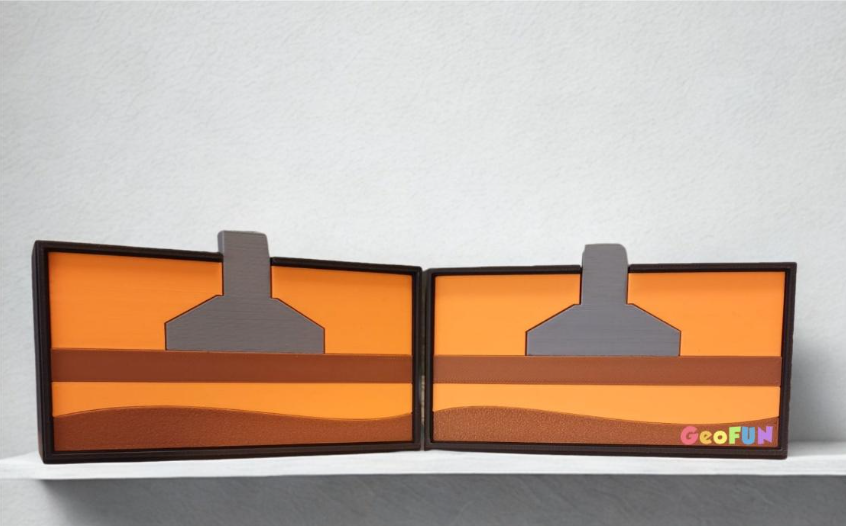
No more imagining everything in 2D! With our 3D physical model of shallow foundations,you can see firsthand how the foundation interacts with the soil in a tangible way. It’s an ideal tool for hands-on teaching, exhibitions, and in-person classes.
The first model, a classic pad footing with soil layers, was created by Victor Ramos. Building on this initiative, other models are being developed by Victor Cavalcanti and Victor Ramos — that’s double V for victory — always under the supervision of Dr Bruna Lopes and Dr Mariana Chrusciak. The idea grew so much it sparked a GeoFUN spin-off educational project ProFUN3D – Development of Scaled Foundation Prototypes for 3D Printing.This is Foundation engineering—straight from the screen to your desk!